
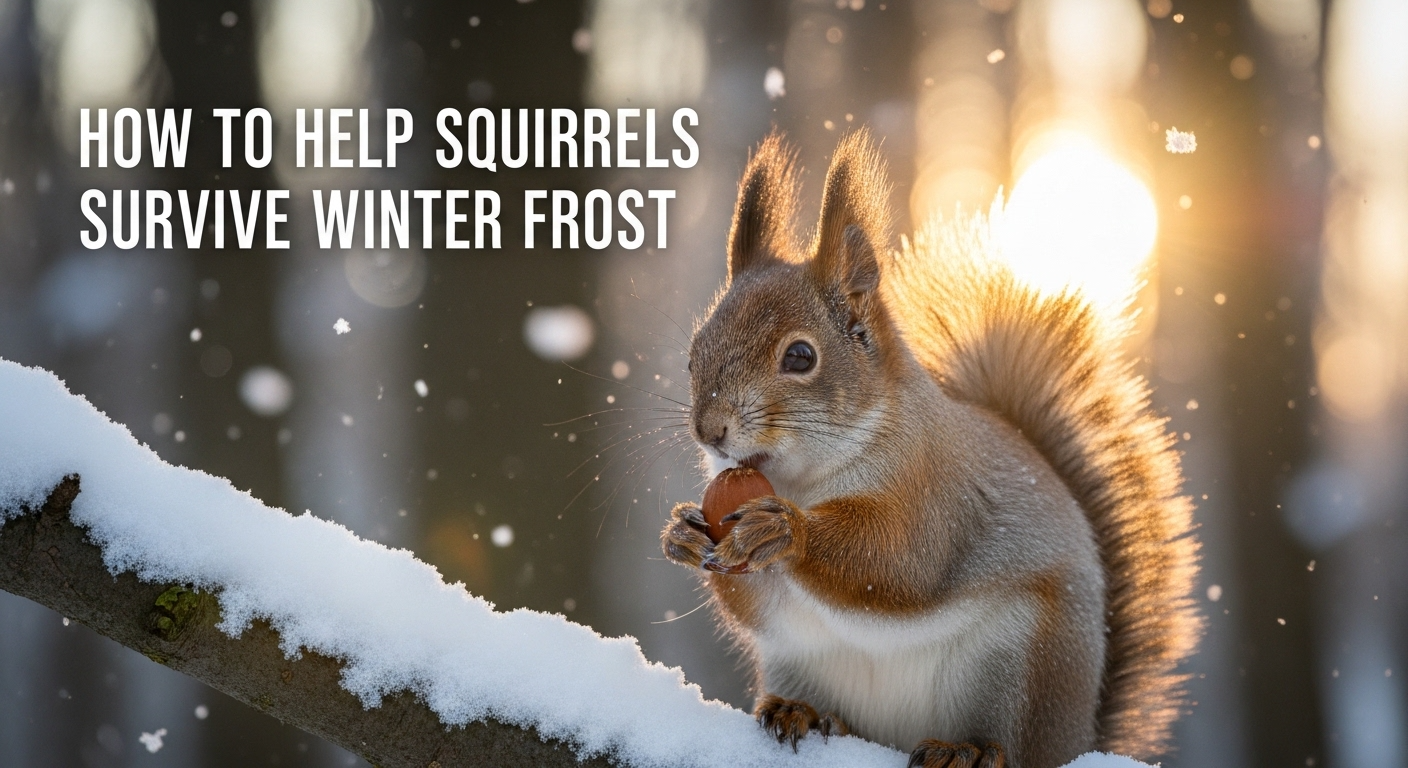
Most people assume squirrels have winter figured out. They spend autumn burying nuts, they find them again when they need them, and the cold season passes without much trouble.
That picture is accurate in a mild winter. In a prolonged, hard freeze, it falls apart completely.
When the ground locks solid and snow buries every familiar landmark, a squirrel can starve within days even if its food cache sits directly beneath it, just inches underground and completely out of reach.
Wildlife experts say that during these periods, a single garden with a reliable food source and unfrozen water can be the difference between survival and death for an entire local squirrel family. Here is what you need to know, and what you can do starting today.
Why Winter Becomes a Frost Trap for Squirrels
Squirrels do not hibernate. Unlike hedgehogs or dormice, they remain active through winter and depend on finding food every single day to maintain body temperature and survive.
Their strategy through the colder months relies on the food they buried during autumn. This is called scatter hoarding, and it involves burying hundreds of individual nuts and seeds across a wide area of garden, park, and woodland. The distribution spreads the risk so that no single buried cache represents everything.
During an average winter with occasional frosts, this system works. The ground softens enough between cold spells for squirrels to dig down and recover their stores.
During an extended cold snap, the strategy fails completely. Ground becomes rock hard several inches deep. Snow accumulates and buries the visual landmarks squirrels use to locate their caches. They can smell the food beneath them but cannot dig through frozen soil quickly enough without burning more energy in the attempt than the food would provide.
At the same time, their calorie requirement increases sharply. Maintaining body temperature in sub-zero conditions demands significantly more energy than on a mild winter day. The combination of inaccessible food and higher energy demands creates a rapid and dangerous spiral.
How Quickly the Situation Becomes Life-Threatening
Squirrels have very little fat reserve. Unlike animals that put on significant weight before winter, squirrels depend almost entirely on regular food access rather than stored body fat.
When food is not available and energy output is high due to cold, their core body temperature begins to fall. Once hypothermia sets in, the process accelerates. A squirrel in serious calorie deficit during a hard frost can slip from active foraging to lethal hypothermia within hours.
Wildlife specialists from the German Wildlife Foundation and other European conservation organisations have documented that ice winters hit urban and suburban squirrels hardest. These animals already have access to fewer natural food sources than woodland squirrels. When frost removes the limited options that remain, the margin for survival is extremely thin.
The good news is that the same urban environment that creates the problem also provides the solution. Squirrels in built-up areas live near human homes. Those homes have gardens. And those gardens, with very little effort, can become reliable winter refuges.
What to Feed Squirrels During a Cold Snap
The goal with winter feeding is to provide high-energy food that closely matches what squirrels would gather themselves in better conditions. Natural, calorie-dense, and unsalted are the three principles to keep in mind.
Unsalted hazelnuts and walnuts in the shell are the best starting point. The shell provides a small amount of additional engagement and the nut itself is exactly the kind of food a squirrel would have buried in autumn. Beechnuts and acorns gathered from chemical-free areas work well for the same reason.
Pumpkin seeds and sunflower seeds, both unsalted, are excellent supplementary options. They are calorie-dense, easy for squirrels to handle, and widely available from garden centres and wildlife supply shops.
Small amounts of unsweetened dried apple or pear can add variety. Ready-made squirrel food mixes from reputable wildlife suppliers are a convenient option that takes the guesswork out of the selection process.
Salty snacks, flavoured nuts, chocolate, bread, and processed human food must be kept off the menu entirely. These products cause digestive problems, dehydration, and in some cases serious poisoning. The fact that a squirrel will eat something does not mean it is safe for them.
Foods That Are Safe and Foods to Avoid
| Safe to Offer | Never Feed These |
|---|---|
| Unsalted hazelnuts and walnuts in shell | Salted or flavoured nuts of any kind |
| Beechnuts and acorns (chemical-free) | Bread and processed baked goods |
| Unsalted pumpkin and sunflower seeds | Chocolate or cocoa products |
| Small pieces of unsweetened dried fruit | Crisps, biscuits, and salty snacks |
| Reputable ready-made squirrel food mixes | Dairy products including cheese or milk |
The safe column lists foods that provide appropriate nutrition and do not cause harm. The never feed column lists products that are commonly offered by well-meaning people but that can cause digestive distress, dehydration, poisoning, or nutritional imbalances in squirrels. When in doubt, stick to natural, unsalted nuts and seeds.
Water: The Most Overlooked Part of Winter Help
Most people who decide to help wildlife through winter focus on food. Water is at least as important and often more immediately critical.
Natural water sources freeze during a hard cold snap. Puddles, shallow ponds, and birdbaths all become inaccessible. Snow exists in abundance but does not automatically provide adequate hydration, particularly for animals that are already weakened or stressed by cold.
Dehydration during winter cold can kill squirrels and other garden wildlife faster than starvation in some circumstances. A squirrel that cannot access liquid water loses body condition rapidly regardless of how much solid food it has eaten.
The solution is simple. Place a shallow bowl or plant saucer in a sheltered corner of the garden. Fill it with fresh, lukewarm water each morning. On very cold nights, bring it inside to prevent freezing and put it back out early the following morning before squirrels begin their most active foraging period.
According to wildlife specialists, access to unfrozen water may be the single most effective form of winter garden help for squirrels and other small garden animals. It costs almost nothing and requires only a daily minute of attention.
Setting Up a Feeding Station That Actually Works
Where you place food matters almost as much as what you provide. Squirrels feel vulnerable on the ground, especially in gardens where cats or dogs are present.
A feeding shelf or simple wooden box fixed to a tree trunk or sturdy fence post at a height of at least 1.5 to 2 metres provides the elevation squirrels prefer. Position it near existing branches so that squirrels can approach from above rather than climbing a bare post from ground level, which they are less comfortable doing in an exposed location.
Keep the feeding station visible from a window if possible. Being able to observe it lets you monitor how much food is being taken, whether squirrels are visiting regularly, and whether any individual animals appear to be in difficulty.
Avoid placing the station in areas of heavy human foot traffic, noisy play areas, or spots frequently used by dogs. Squirrels will use a feeding station consistently once they discover it and feel safe there, but they will abandon it immediately if it regularly produces stress rather than sustenance.
Maintaining a Regular Routine
Wild animals adapt to predictable patterns faster than most people realise. Once squirrels identify your garden as a reliable food source, they will visit at consistent times and in consistent ways.
Refilling the feeding station once a day at roughly the same time reduces stress for visiting animals. They learn when food appears and adjust their foraging routes accordingly. An unpredictable station that sometimes has food and sometimes does not provides less benefit than a consistent one, even if the total amount of food provided is the same.
Morning is typically the best time to refill. Squirrels are most active in the hours after dawn and will find fresh food quickly. Refilling in the evening means food sits overnight and may attract less welcome visitors or become damp and less appealing by morning.
Hygiene at the Feeding Station
A feeding station that is not maintained creates its own problems. Old, wet food develops mould rapidly. Droppings accumulate. Damp conditions encourage bacterial growth that can spread disease through visiting animals.
Remove any uneaten or wet food daily. Even high-quality nuts develop mould within a day or two once damp. A quick check each morning before refilling takes less than a minute and prevents the accumulation of material that would cause harm.
Rinse the food bowl or feeding shelf every few days with clean water. A brief clean with a dilute pet-safe disinfectant once a week is sufficient to reduce bacterial load without leaving residue that would deter squirrels from visiting.
The water bowl should be rinsed and refilled with fresh water every day. Standing water becomes contaminated quickly with droppings, debris, and algae even in cold temperatures.
Good hygiene at a winter feeding station is not optional. It is what separates a station that genuinely helps wildlife from one that concentrates disease and creates harm.
Recognising a Squirrel in Serious Trouble
Even with good support in the garden, some squirrels reach a critical state during intense freezes. Knowing the warning signs lets you make the right decision about whether to act further.
A squirrel that remains motionless on the ground for a prolonged period is showing a serious warning sign. Ground-level immobility in daylight is not normal squirrel behaviour and suggests significant weakness or injury.
Slow, uncoordinated movement, staggering, or falling from low branches indicates a squirrel in difficulty. Healthy squirrels move quickly and with precise coordination even on narrow branches and fences. Any departure from that precision is significant.
Clearly visible ribs, sunken flanks, and a rough, dull coat suggest severe malnutrition. A squirrel in this condition has already been in calorie deficit for several days and needs more than a garden feeding station can provide.
Half-closed eyes and little reaction to nearby humans indicate collapse is imminent. A healthy squirrel flees from humans at close range. An unresponsive one is in crisis.
In any of these situations, contact your local wildlife rescue organisation or animal shelter rather than attempting to handle the animal yourself. Wild squirrels are protected in many regions, and handling without guidance can lead to bites, additional stress for the animal, and legal complications. Wildlife rescue teams have the equipment, training, and legal authority to intervene appropriately.
Why Climate Patterns Are Making Frost Winters More Dangerous
Climate change does not only mean warmer conditions. In much of Europe, the UK, and parts of North America, it increasingly means more extreme weather variation. Unusually warm periods are followed by sudden, severe frosts that arrive without the gradual cooling that wildlife would historically have used to prepare.
Squirrels adjust their behaviour to the conditions they experience in recent weeks. A mild autumn and early winter encourages more activity, more energy expenditure, and less conservative resource management. When a sharp freeze then arrives unexpectedly, their physical reserves no longer match what the conditions demand.
The gap between what a squirrel expects based on recent experience and what the weather delivers has widened in recent years. This creates situations where otherwise healthy, well-supplied squirrels are caught out by a weather event their behaviour was not calibrated to handle.
Garden support cannot address this structural problem. But it can provide a buffer during the sharpest periods of unexpected cold. A reliable food source and water when natural sources are frozen extends the margin of survival for local populations through the worst weeks.
Small Changes to Your Garden That Help Long-Term
Beyond active feeding during hard freezes, the way a garden is designed and maintained has a significant effect on how well it supports squirrels and other wildlife through winter.
Leaving old trees in place, particularly those that produce nuts such as oak, hazel, or beech, creates natural food sources that require no ongoing management. A single mature hazel tree produces enough nuts in a good year to support multiple squirrels across an entire winter season.
Allowing a corner of the garden to remain wilder than the rest, with leaf piles, deadwood, and natural ground cover, encourages the insects and fungi that also form part of a squirrel’s diet. A garden that is perfectly tidy from a human perspective offers very little to wildlife beyond the active feeding you provide.
Native shrubs like hazel, hawthorn, and elder provide both shelter and seasonal food in ways that ornamental non-native plants do not. Replacing even one section of garden border with native species creates disproportionate wildlife value.
The timing of tree pruning matters more than most gardeners realise. Heavy pruning in late autumn can remove squirrel dreys, the leaf nests squirrels use for shelter and sometimes for raising young. It can also strip away last-minute food sources. Most wildlife advisers recommend scheduling significant pruning for late spring, after the coldest period and after any active nesting has concluded, and always checking for active nests before starting work.
How Neighbours Can Work Together
Individual gardens provide individual support. Neighbouring gardens working loosely together provide something much more valuable: a connected corridor of reliable resources that supports a whole local squirrel population rather than just the animals that happen to visit one specific feeding station.
Coordination does not need to be formal or complicated. One household maintains a feeding station. Another keeps a water bowl topped up. A third agrees not to prune the large oak until spring. A fourth leaves their leaf pile in place through February rather than clearing it in November. Together, these small individual decisions create a safety net that no single garden could provide alone.
In larger suburban areas with several households involved, the effect on local squirrel survival during hard winters can be genuinely significant. Wildlife corridors, even informal ones created through voluntary cooperation between neighbours, are among the most effective forms of urban wildlife conservation.
When to Scale Back and When to Increase Help
The goal of winter garden support for squirrels is to provide a lifeline during the hardest periods without creating year-round dependence that changes their foraging behaviour.
During a prolonged hard freeze with temperatures consistently below freezing and snow on the ground, daily feeding and water provision is appropriate and beneficial. These are the conditions where natural food access is genuinely compromised and human help provides real survival benefit.
During mild winter periods when ground is soft and natural food sources are accessible, scaling back to every two or three days is sensible. Making food available but not abundant encourages squirrels to continue their natural foraging behaviour alongside what you provide.
In spring and summer, active supplementary feeding is unnecessary for healthy squirrel populations and may reduce the foraging behaviour that keeps squirrels wild and self-sufficient. The most beneficial approach is targeted support during periods of genuine need, not year-round provision that replaces rather than supplements natural behaviour.
Practical Setup for Different Garden Sizes
In a small urban garden with a single tree and limited outdoor space, a squirrel shelf attached to the tree trunk at 1.5 metres, a shallow water bowl in a sheltered corner, and a handful of unsalted nuts every morning represents a complete and effective support setup. The total cost is minimal and the time commitment is under five minutes per day.
In a larger suburban garden with multiple trees, the options expand. A feeding station on each suitable tree creates multiple access points that reduce competition between visiting squirrels and ensure that more timid individuals can feed without being displaced by more dominant ones.
Scattering a small number of nuts loosely across a quiet part of the garden, rather than always concentrating food in one spot, encourages something close to natural foraging behaviour. Squirrels search for and recover individual pieces rather than repeatedly visiting a single location, which is closer to how they would feed in the wild.
Frequently Asked Questions
Can I feed squirrels every day of winter or just during cold snaps?
During prolonged freezes, daily feeding is appropriate and beneficial. During milder spells, every two to three days is sufficient. Year-round daily feeding is not recommended as it can reduce natural foraging behaviour and create dependency.
Will feeding squirrels attract rats or other unwanted animals?
Any outdoor food can attract rats if it is left on the ground at ground level. Elevating your feeding station to 1.5 metres or higher and removing any uneaten food at the end of each day significantly reduces this risk. Nuts in the shell are less attractive to rats than open seeds left on flat surfaces.
Is it legal to feed squirrels?
In most regions of the UK and Europe, feeding grey squirrels is legal but releasing grey squirrels that have been rehabilitated is restricted in some countries due to their invasive species status. Red squirrels are protected in the UK. If you are unsure of your local regulations, your regional wildlife authority can advise.
What should I do if I find a squirrel that appears injured or collapsed?
Do not attempt to handle it. Contact your nearest wildlife rescue organisation, local RSPCA branch in the UK, or equivalent animal welfare authority. They can advise on whether intervention is appropriate and provide properly trained assistance. Keep children and pets away from the animal while you wait for advice.
Can I make my own squirrel feeding station?
Yes. A simple wooden shelf or box attached to a tree trunk or fence post is entirely adequate. The key features are elevation above ground level, a surface large enough to hold a day’s worth of food, and a slight overhang or roof to keep food dry in rain or snow. Plans are widely available from wildlife gardening organisations.
Do squirrels remember which gardens have reliable food?
Wildlife specialists confirm that squirrels are highly intelligent and quickly learn the location of reliable food sources. Once a squirrel identifies your garden as a consistent resource, it will return regularly and may teach younger family members the same route. Consistency is the most valuable thing you can offer.
How close to my house should the feeding station be?
Close enough to observe from a window, far enough from busy indoor areas to avoid frequent disturbance. Three to five metres from the house, near an existing tree or fence that squirrels already use, is typically ideal. Avoid positions directly beside doors or windows that open frequently.
Read More Latest News and Updates
Visit onetreegrill.site for More Updates
Your Garden Can Be a Lifeline. It Takes Very Little to Make It One.
During a prolonged hard freeze, the difference between a squirrel that survives and one that does not is often a question of metres. The food is there, buried in the ground. The animal knows it. It simply cannot reach it.
A small wooden shelf on a tree. A bowl of lukewarm water topped up each morning. A handful of unsalted hazelnuts placed consistently at the same time each day. None of these require significant effort or expense. Together, they turn a standard garden into a genuine refuge during the weeks that matter most.
The squirrels in your neighbourhood do not need year-round management or elaborate feeding stations. They need reliable support precisely during the periods when their own remarkable survival strategies fail, the prolonged ice winters that lock the ground and remove every natural option.
Set up a feeding station before the next hard freeze arrives rather than after. Fill the water bowl tomorrow morning. Tell your neighbours what you are doing. A garden that is prepared is worth ten times a garden that scrambles to respond once the cold has already bitten.